For years, Muslims in America were told to keep their heads down. Campaigns were built on fear of “Sharia”, mosques were treated as threats, and unconditional support for Israel was the one thing almost every politician agreed on.
On 3 November 2026, American voters went to the polls for the midterm elections. Within forty-eight hours, the first Muslim had been elected to the United States Senate, a record number of Muslims had won seats in Congress, two of the loudest anti-Muslim campaigns in Texas had been defeated, and the Vice President of the United States had named the relationship with Israel as one of the reasons his party lost.
In the most powerful country in the world, the tide is shifting. Here is what happened, with the facts checked, and what it means for us.
3 November 2026 · by the numbers
The tide, in figures
1st
Muslim ever elected to the US Senate: Abdul El-Sayed, Michigan
7
Muslims elected to Congress, a record
97+
Muslims elected to federal, state and local office
CAIR preliminary count
Whose side are Americans on? For the first time since Gallup began asking in 2001, more Americans sympathise with the Palestinians.
Palestinians41%
Israelis36%
Gallup, February 2026. The gap is within the margin of error.
He won
$31.5M
Spent by AIPAC's super PAC to stop Abdul El-Sayed
$4bn
A year in US military aid to Israel, which the President announced would end early. Congress has yet to act.
Texas: the anti-mosque campaigners lost
Hinojosa (D)52.8%
Abbott (R)45.7%
Talarico (D)55.1%
Paxton (R)43.0%
Governor and US Senate races, near-final results
Sources: AP via NPR and CBS; Religion News Service; CAIR; Gallup; Responsible Statecraft; PBS; Texas Tribune. Full links at the end of the article.
1. Historic firsts
The first Muslim US senator
Dr Abdul El-Sayed, a physician and former public-health official, won Michigan's Senate seat, defeating former Congressman Mike Rogers. He is the first Muslim ever elected to the US Senate.
A record in Congress
At least seven Muslims were elected to Congress: one senator and six members of the House. The previous record was five. New faces include Dr Adam Hamawy (New Jersey) and Darializa Avila Chevalier (New York), the first Latina Muslim elected to Congress.
Re-elected alongside them were Ilhan Omar, Rashida Tlaib, André Carson and Lateefah Simon. Beyond Congress, the Council on American-Islamic Relations (CAIR) counted at least 97 Muslims elected to federal, state and local offices in its preliminary tally, up from 82 in 2022.
2. Hate did not sell
In Texas, Governor Greg Abbott led a long campaign against EPIC City, a planned Muslim community near Dallas, calling it a “Sharia city” and setting several state agencies against it. Attorney General Ken Paxton pursued the project too.
On election day, Abbott lost the governorship to Democrat Gina Hinojosa, and Paxton lost his race for the US Senate to James Talarico, the first Democrat to win a Senate race in Texas since 1988.
To be fair to the facts: Texans voted on many issues, and no study has yet shown how much the anti-Muslim campaign itself cost these candidates. What is clear is that campaigning against a mosque community did not save them.
3. Money could not buy the result
AIPAC’s super PAC, the United Democracy Project, spent about $31.5 million trying to stop Abdul El-Sayed in the primary and the general election. Reporting since the election puts AIPAC’s spending in races its candidates lost at more than $55 million.
El-Sayed won anyway. Spending can buy advertising; it cannot buy hearts, and it cannot rescue a cause that voters have stopped believing in.
4. Support for Israel became a liability
This is the shift few people believed they would see in their lifetime.
February 2026: the public turns
For the first time since Gallup began asking in 2001, more Americans said their sympathies lie with the Palestinians (41%) than with the Israelis (36%). Gallup notes the gap is within the margin of error, but the direction over two decades is unmistakable. A Quinnipiac poll in September found the same reversal.
3 November: the President on military aid
On election day, President Trump said the US would end its roughly $4 billion a year in military aid to Israel early, years before the current agreement expires in 2028. Israel could still buy American weapons. How this would happen is disputed: Congress, not the President, approves the funding, and Israeli officials have pushed back.
4 November: the Vice President's verdict
JD Vance posted four reasons his party lost: voters wanted to end the war with Iran, to lower the cost of living, to put America first, and to change America's relationship with Israel. Pro-Israel groups called him “demonstrably wrong”. That a sitting Vice President said it at all would have been unthinkable a few years ago.
Much of this shift traces back to Gaza. Years of images that the world could not unsee, carried by ordinary people on their phones, changed what Americans were willing to accept in their name. The patience and dignity of Gaza’s people moved the conscience of a nation that had long looked away.
5. Allies from unexpected places
In Michigan, exit polling of early Jewish voters found that between 57% and 60% voted for Abdul El-Sayed, despite a campaign that tried to paint him as a threat to them. (Early votes lean Democratic, so the final figure may be lower.)
It is a reminder that criticising the policies of the State of Israel is not the same as opposing Jewish people, and that many Jewish Americans themselves stand for Palestinian rights.
What the headlines leave out
A shifting tide is not a finished one. To keep our hopes honest:
- Many causes, not one. Democrats won control of both the House and the Senate, and most analysts point first to the US war with Iran, rising petrol prices and the cost of living. Gaza and anti-Muslim campaigns were part of the story, not all of it.
- The aid announcement is not law. Ending military aid to Israel needs Congress, and the plan may change or be reversed.
- The polls are close. Americans are now roughly divided, not united behind the Palestinians, and Republicans still sympathise more with Israel.
- Some results are unofficial. A few races were still being counted or certified when this was written.
What it means for communities everywhere
- Participation works. Muslim voters organised, registered and turned out, and it changed results. Where we live as citizens, engaging honestly and peacefully is how fairness is won.
- Fear has limits. Campaigns built on suspicion of a minority can be defeated when ordinary voters see through them.
- Money is not everything. The best-funded side does not always win when voters care about the issue.
- Stay grounded. Celebrate progress with humility. No candidate is perfect and no victory is final: choose the greater good and the lesser harm, and keep working.
Sources
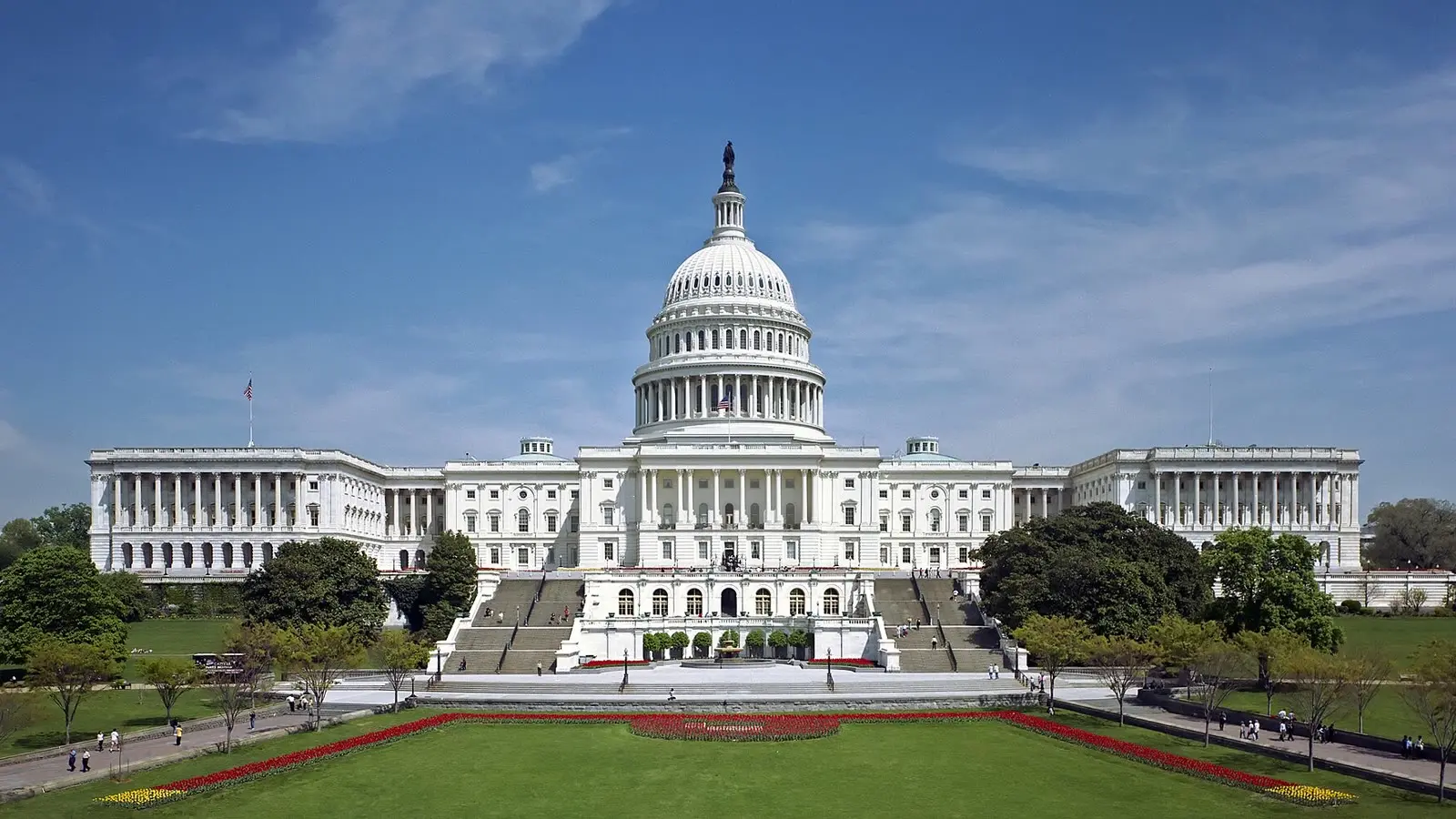
Cover: the US Capitol, west front (Architect of the Capitol, public domain).