
The Legacy Hidden Beside the Roads of Makkah - ʿAyn Zubaydah (The Fountain of Zubaydah)
A remarkable story of how one woman's compassion transformed the Hajj journey for millions by quenching the thirst of countless pilgrims—and a timeless reminder that every believer has the opportunity to leave behind a legacy that lives on long after they are gone.
ECHOES OF HISTORY
6/27/20262 min read
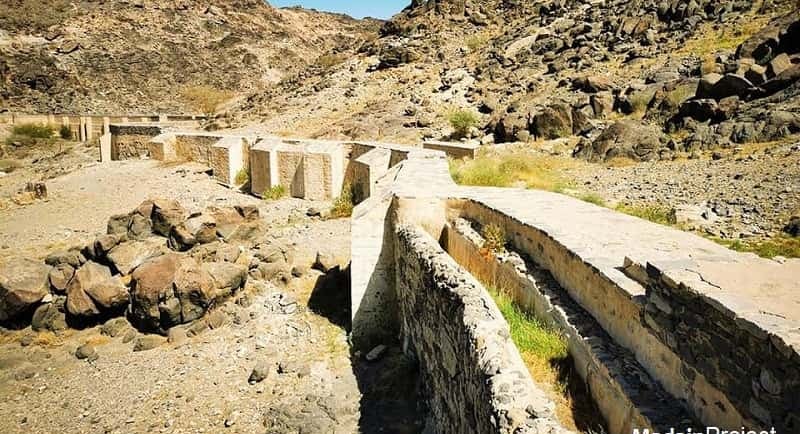
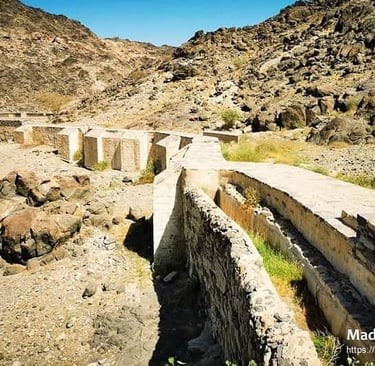
If you have traveled through Makkah, especially on the roads connecting 'Arafah, Muzdalifah, Mina, and the outskirts of the city, you may have noticed the remains of old stone canals, dams, and aqueducts running across the mountains and valleys.
Many pilgrims pass by them without realizing what they are.
These are the remains of ʿAyn Zubaydah (The Fountain of Zubaydah)—one of the greatest charitable projects in Islamic history.
More than 1,200 years ago, Zubaydah bint Ja'far, the noble wife of the Abbasid Caliph Harun al-Rashid, performed Hajj. As she witnessed the immense suffering of the pilgrims—thirst, scarcity of water, and exorbitant prices for a single water skin—her heart was moved with compassion. She did not simply feel sorry for them; she resolved to solve their problem.
She commissioned one of the most ambitious engineering projects of the Muslim world: a network of canals, tunnels, reservoirs, and aqueducts that carried water across mountains and valleys into Makkah and the sacred sites. It is reported that when engineers warned her of the enormous cost, she famously replied:
"Build it, even if every strike of the pickaxe costs a dinar."
She spent an immense fortune so that millions of pilgrims she would never meet could drink water.
SubḥānAllāh... that project continued serving the guests of Allah for over twelve centuries, providing water to countless Hujjaj from every corner of the world. Even today, its remains still stand as silent witnesses to her generosity and vision.
When we reflect on her legacy, we cannot help but remember the words of the Prophet ﷺ:
"A man saw a dog eating the earth from thirst. So he filled his shoe with water and gave it to the dog to drink. Allah appreciated his deed and forgave him."
(Ṣaḥīḥ al-Bukhārī & Ṣaḥīḥ Muslim)
If Allah forgave a person for giving water to one thirsty animal, imagine the reward of a woman whose charity quenched the thirst of countless pilgrims for more than a thousand years.
This is the beauty of Ṣadaqah Jāriyah—a deed that continues to benefit others long after we have left this world.
Perhaps we may never build a canal across the mountains of Makkah.
But each of us can leave behind a legacy.
A child raised upon Islam.
A student taught beneficial knowledge.
A Qur'an gifted.
A masjid supported.
A well dug.
A family fed.
A sincere act of da'wah.
A charity that continues long after we are gone.
Years from now, people may not remember our names—but if Allah accepts our deeds, their rewards will continue to reach us in our graves.
May Allah grant us the ability to leave behind deeds that outlive us, make us among the people of ongoing charity, beneficial knowledge, and righteous offspring who pray for us. May He accept every small effort we make for His sake, forgive our shortcomings, and allow our legacy to be one that brings benefit to His creation and earns His pleasure until the Day we meet Him.
Āmīn.