A land ruled for four centuries by the Ottomans, promised three times over by Britain, divided by the UN, and lost in the Nakba. Six chapters. Every one asks you to do something.
For four hundred years, from 1516, Palestine was part of the Ottoman Empire. It was run as districts; from 1872 the district of Jerusalem reported directly to Istanbul. Muslims, Christians and Jews lived side by side, most of them speaking Arabic.
Jewish life in the Muslim world had deep roots: the great Jewish scholar Maimonides wrote most of his works in Arabic, in 12th-century Egypt. Around 1890, about 8% of Palestine's people were Jewish, many of them Arabic-speaking.
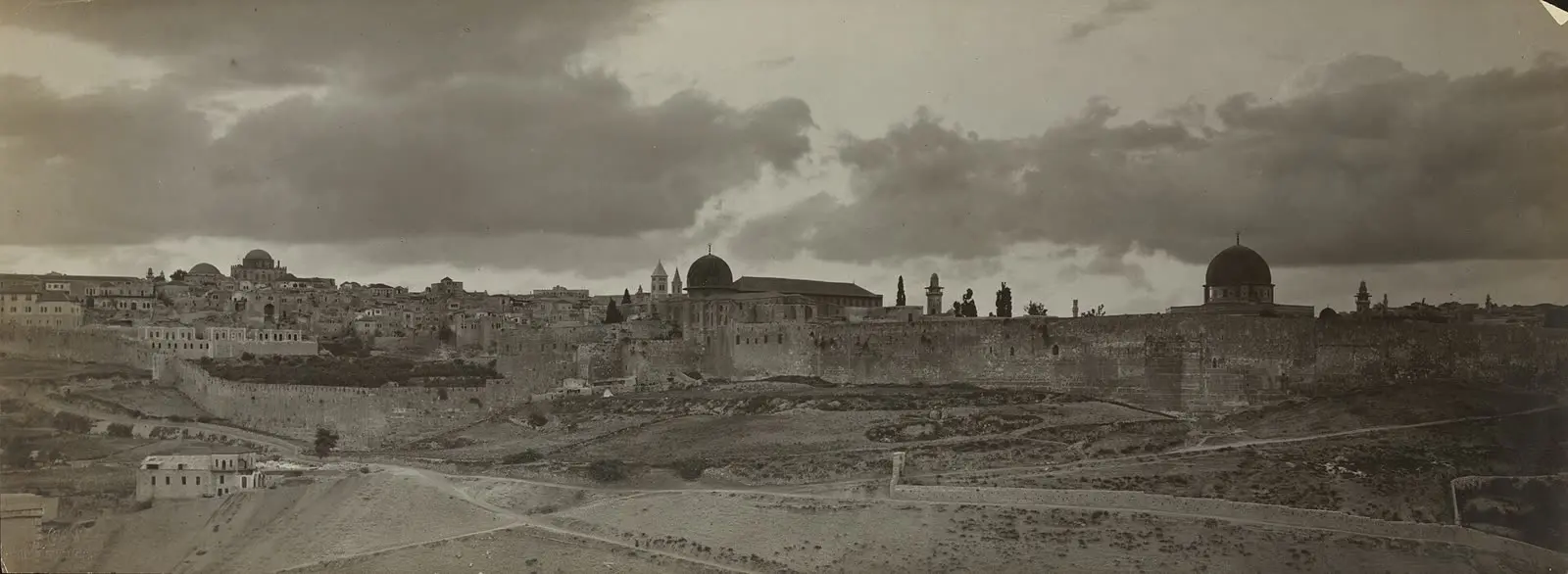
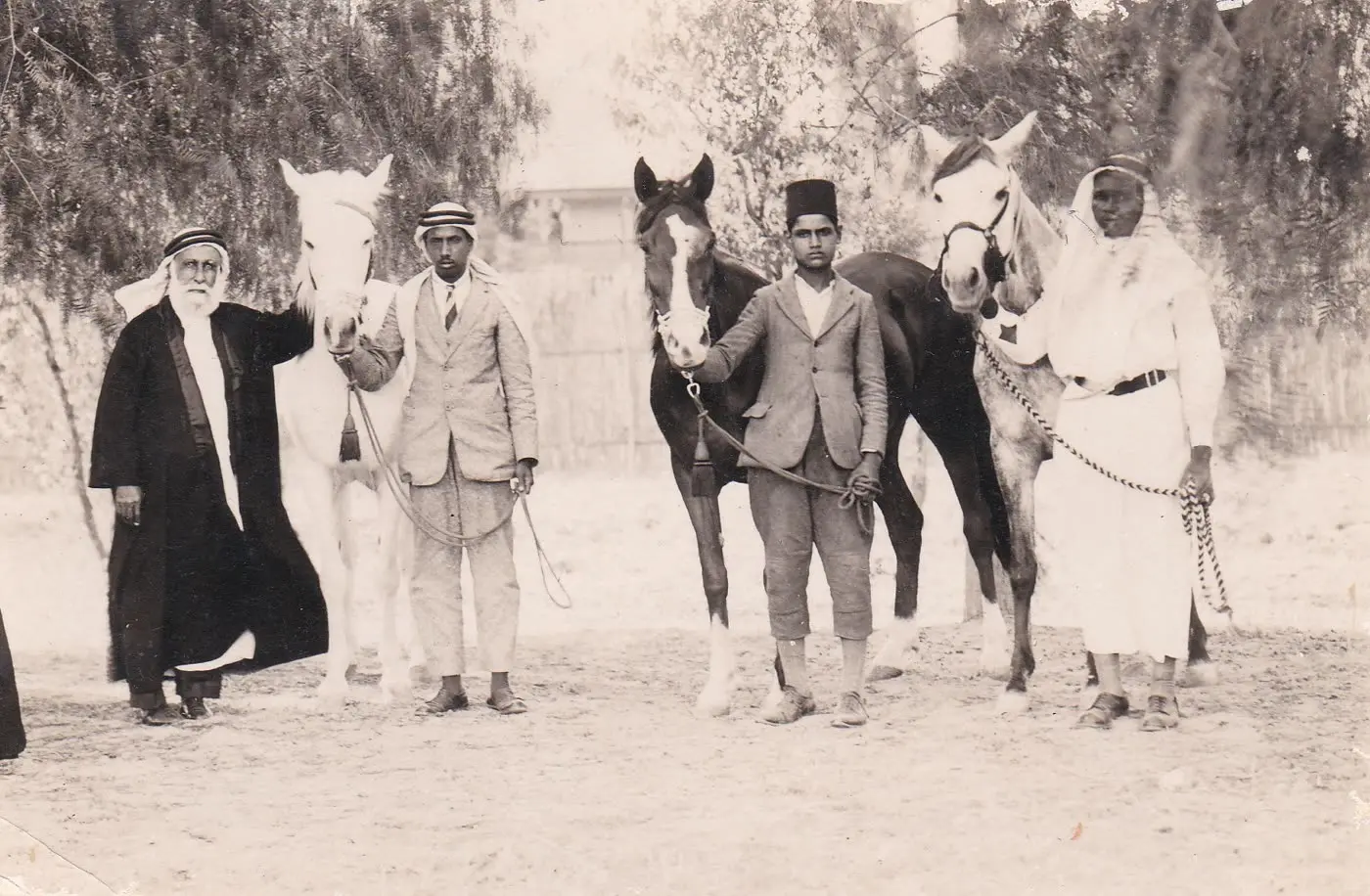
Jerusalem, early 1900s
Myth or fact? Tap each card to find out.
Chapter 2 1915–1917
Three Promises
In November 1914 the Ottoman Sultan, who was also Caliph, called Muslims to jihad against Britain and its allies. Britain ruled tens of millions of Muslims in India and Egypt. An uprising led by the Sharif of Makkah, guardian of Islam's holiest cities, would weaken that call. So Britain began making promises.
0 of 3 promises opened
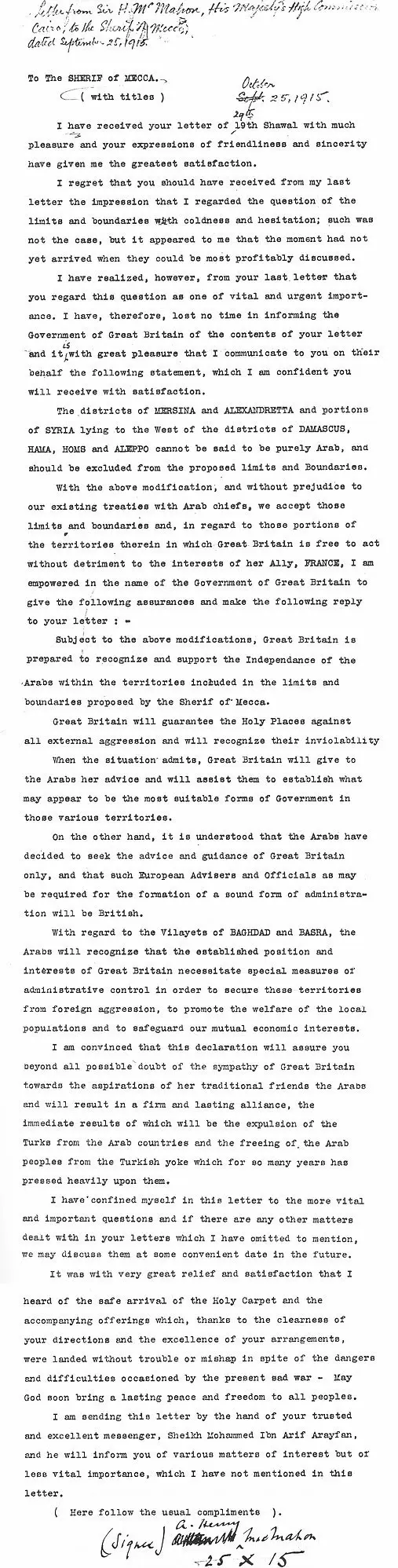
Sharif Hussein bin AliMcMahon's letter, October 1915
1915 · Hussein–McMahon letters
The Promise to the Sharif of Makkah
Between
Britain (Sir Henry McMahon, High Commissioner in Egypt) and Sharif Hussein bin Ali, Emir of Makkah
Britain wanted
An Arab uprising against the Ottoman Empire, Germany's ally in the First World War.
The promise
In ten letters between July 1915 and March 1916, Britain pledged to recognise and support Arab independence across most of the lands Sharif Hussein asked for, with some areas excluded.
“Subject to the above modifications, Great Britain is prepared to recognise and support the independence of the Arabs in all the regions within the limits demanded by the Sherif of Mecca.”
McMahon to Sharif Hussein, 24 October 1915
Public or secret? Private letters. They were published in full only in 1939.
The catch Whether Palestine was among the excluded areas was argued over for decades: Britain later said it was; Arab leaders said it never was.
What happened next In June 1916, trusting these letters, Sharif Hussein launched the Arab Revolt against the Ottomans, with the British officer T. E. Lawrence (“Lawrence of Arabia”) as a liaison.
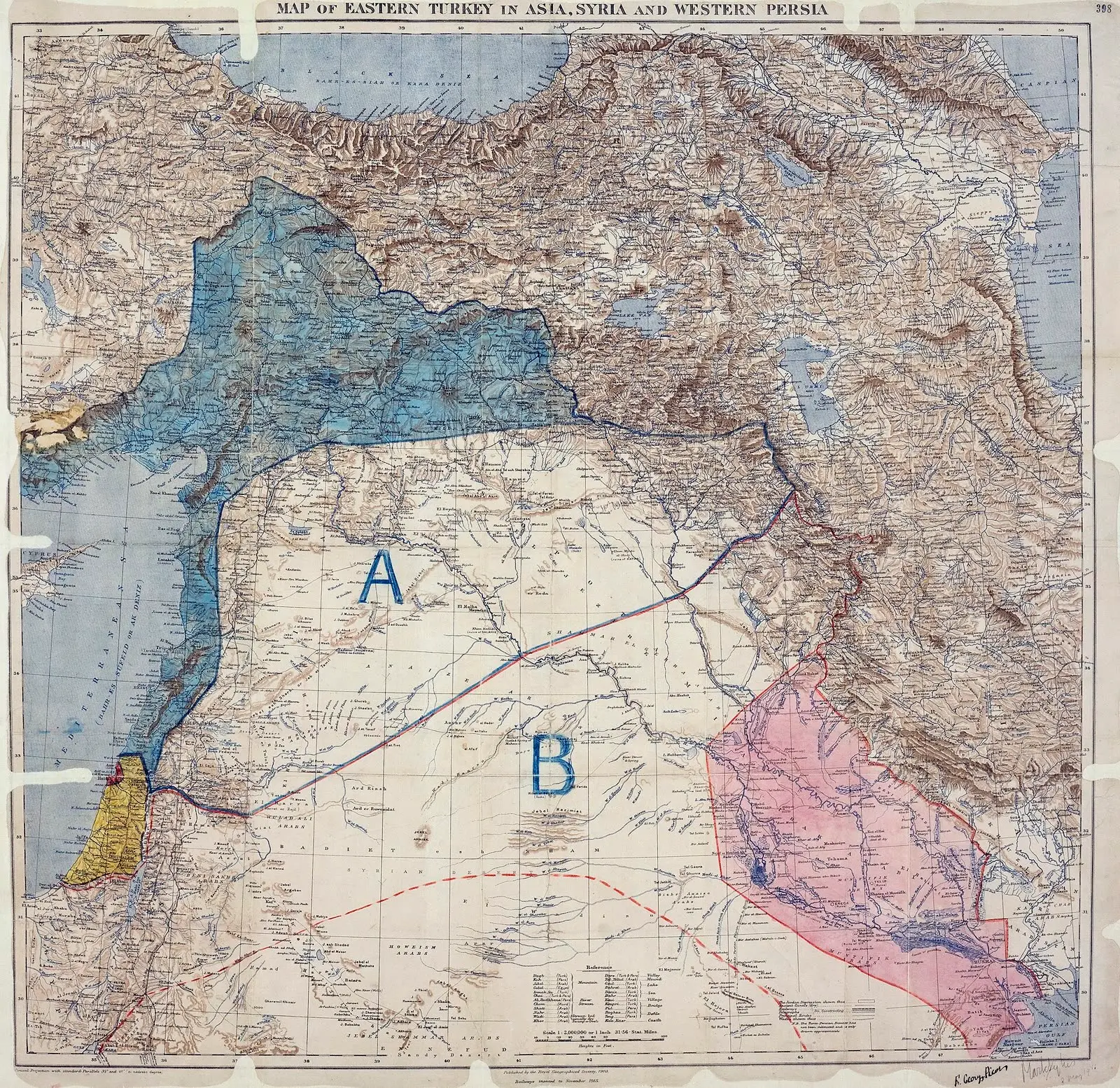
The signed Sykes–Picot map, 8 May 1916
1916 · Sykes–Picot Agreement
The Secret Carve-Up
Between
Britain (Sir Mark Sykes) and France (François Georges-Picot), with Russia's consent
Britain wanted
To agree, before the war was won, how Britain and France would share the Ottoman Arab lands.
The promise
The region was divided on a map with straight lines: France would control or influence coastal Syria and Lebanon and the north; Britain southern Iraq and the ports of Haifa and Acre; and most of Palestine was set aside as an international zone.
“That in the brown area there shall be established an international administration, the form of which is to be decided upon after consultation with Russia, and subsequently in consultation with the other allies, and the representatives of the Shereef of Mecca.”
Sykes–Picot Agreement, May 1916 (the “brown area” is Palestine)
Public or secret? Secret. The world learned of it in November 1917, when Russia's new Bolshevik government published the Allies' secret treaties.
The catch It was signed while Britain was still assuring Sharif Hussein of Arab independence.
What happened next When the treaty was published, British officials assured Sharif Hussein in early 1918 that it was enemy propaganda meant to divide the Allies from the Arabs.
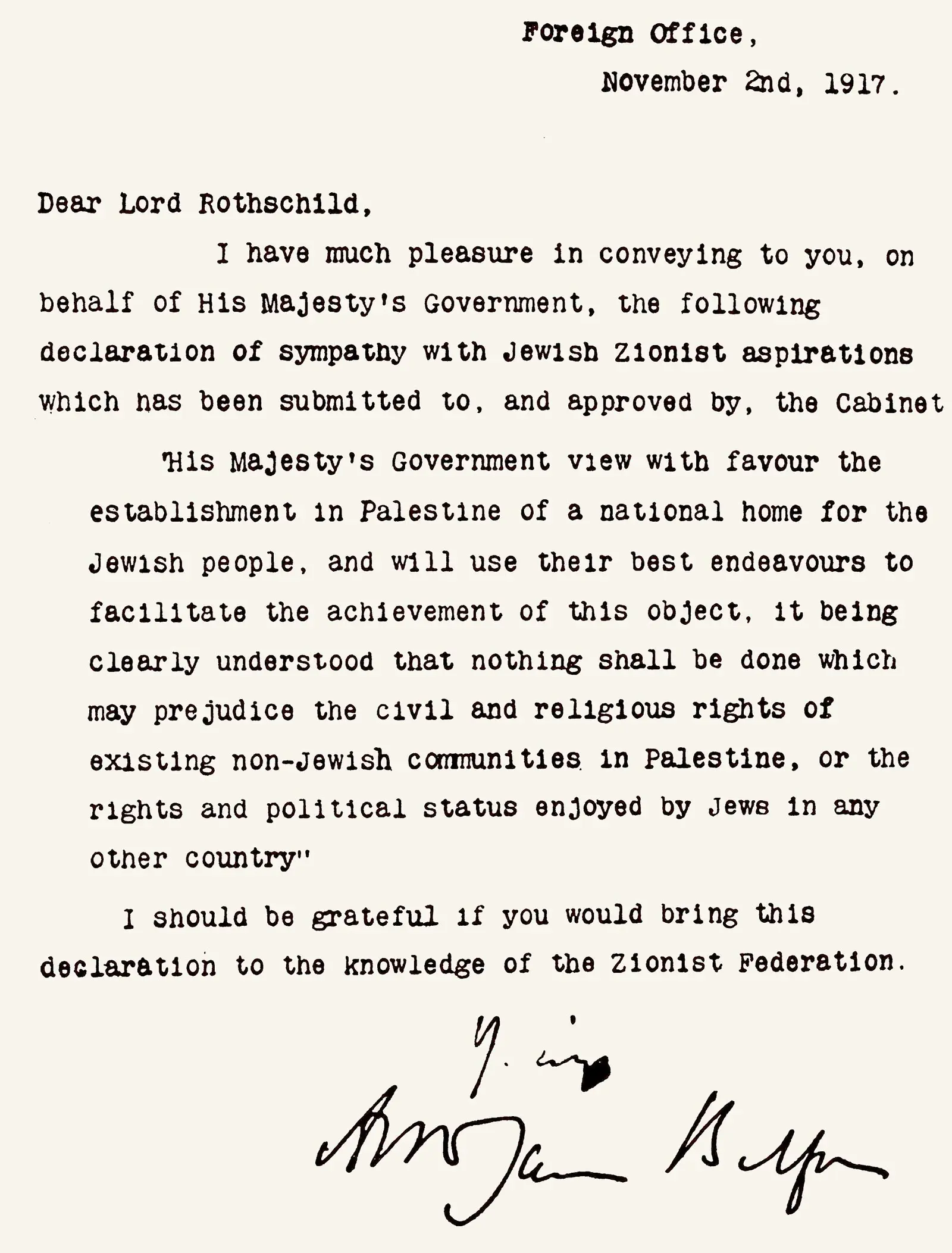
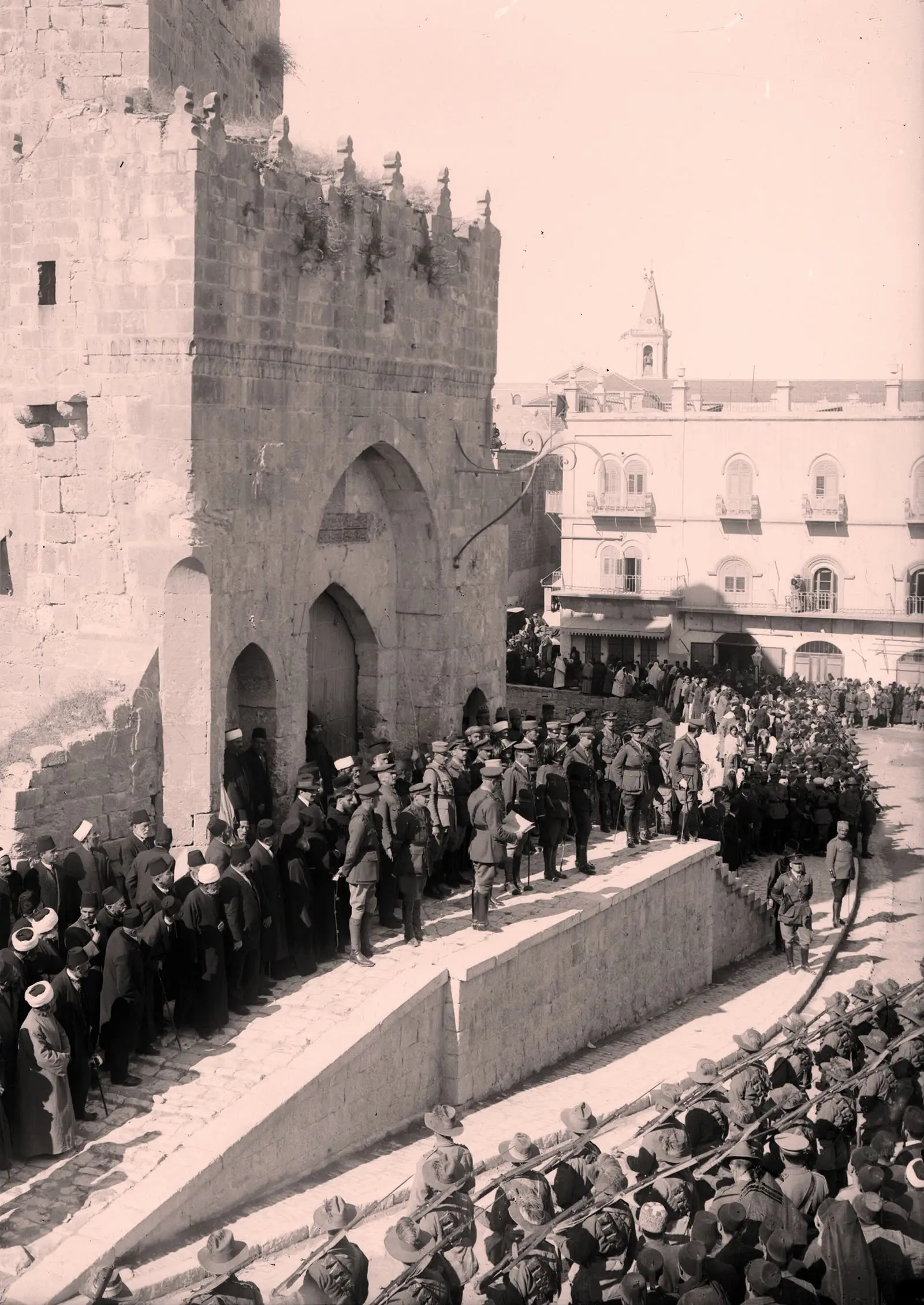
The Balfour Declaration, 2 November 1917British forces enter Jerusalem, December 1917
1917 · Balfour Declaration
The Promise of a National Home
Between
Britain (Foreign Secretary Arthur Balfour) and Lord Rothschild, for the Zionist movement
Britain wanted
Support for the British war effort, and a friendly presence beside the Suez Canal after the war.
The promise
A one-page letter declared British support for “a national home for the Jewish people” in Palestine, a land Britain did not yet hold. At the time, about nine in ten people living there were Arab Muslims and Christians.
“His Majesty's Government view with favour the establishment in Palestine of a national home for the Jewish people … it being clearly understood that nothing shall be done which may prejudice the civil and religious rights of existing non-Jewish communities in Palestine …”
Balfour to Lord Rothschild, 2 November 1917
Public or secret? Public. It was printed in British newspapers a week later.
The catch The Arab majority is not named. It appears only as “existing non-Jewish communities”, with civil and religious rights but no mention of political ones.
What happened next Five weeks later British forces entered Jerusalem. In 1922 the League of Nations wrote the declaration into Britain's Mandate for Palestine.
🔒
Open all three promises to unlock
The collision
Three promises. One land.
To Sharif HusseinArab independence, with Palestine included by his reading
Palestine
To FranceAn international administration
To the Zionist movementA national home for the Jewish people
They could not all be kept, and the people who lived there were consulted in none of them.
Chapter 3 1919–1947
The Mandate
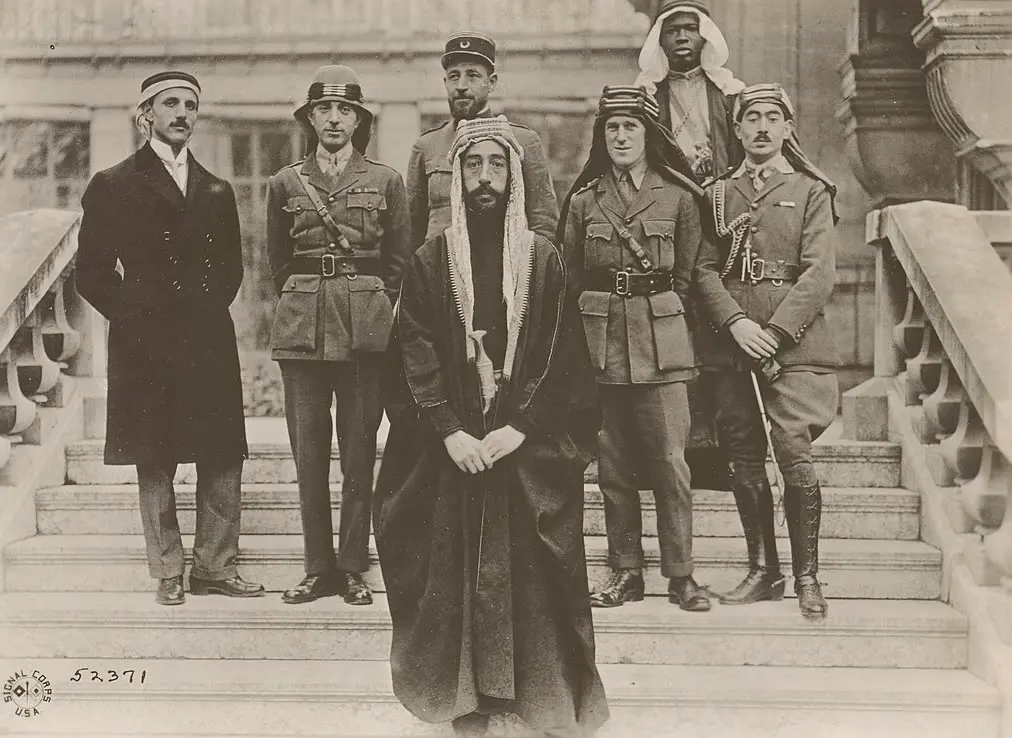
At the Paris Peace Conference in 1919, Sharif Hussein's son Faisal argued for the independence the Arabs had been promised. It was not granted. In 1920, at San Remo, Britain and France shared out the Arab lands as “mandates”. France drove Faisal out of Damascus; Britain made him king of Iraq and his brother Abdullah emir of Transjordan. Hussein himself lost the Hijaz in 1925 and spent years in exile in Cyprus.
“…peoples not yet able to stand by themselves under the strenuous conditions of the modern world… the well-being and development of such peoples form a sacred trust of civilisation.”
Covenant of the League of Nations, Article 22: the reasoning behind the mandates
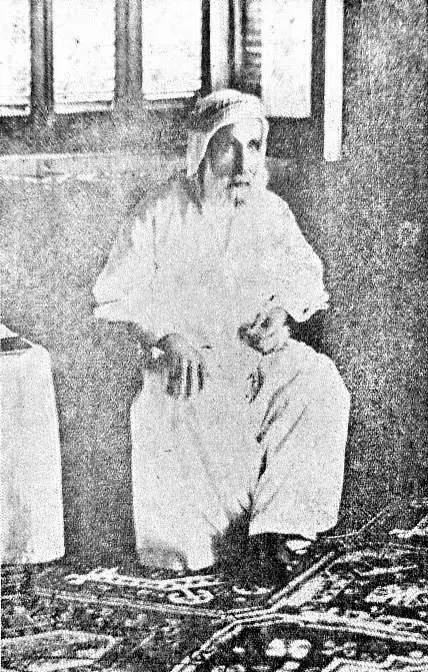
Faisal's delegation in Paris, 1919Sharif Hussein in exile, Cyprus
Watch the population change Tap a year for the numbers.
Share of Palestine's population that was Jewish. Tap a year.
Jewish Arab (Muslim and Christian) · *estimate
1922 The League of Nations gives Britain the Mandate for Palestine, with the Balfour Declaration written into it.
1920s–30s Jewish immigration, most of it from Europe, grows sharply in the 1930s as persecution in Europe worsens.
1936–39 Palestinians revolt against British rule and mass immigration. Britain crushes the revolt.
1939 A British White Paper limits Jewish immigration. Zionist armed groups (the Haganah, Irgun and Lehi) fight Palestinians and, at times, the British.
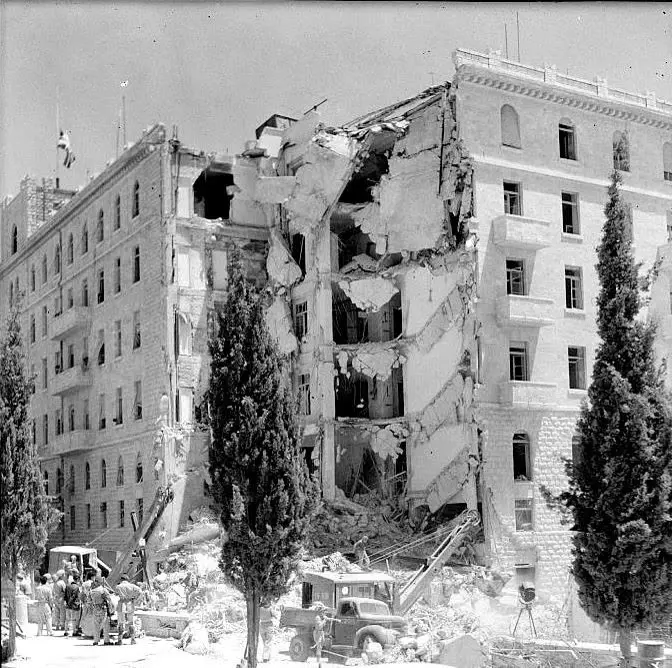
22 July 1946 The Irgun bombs the King David Hotel in Jerusalem, the British headquarters, killing 91 people. Its leader, Menachem Begin, later becomes Israel's prime minister.
The King David Hotel after the bombing, July 1946
Chapter 4 1947–1948
Partition & the Nakba
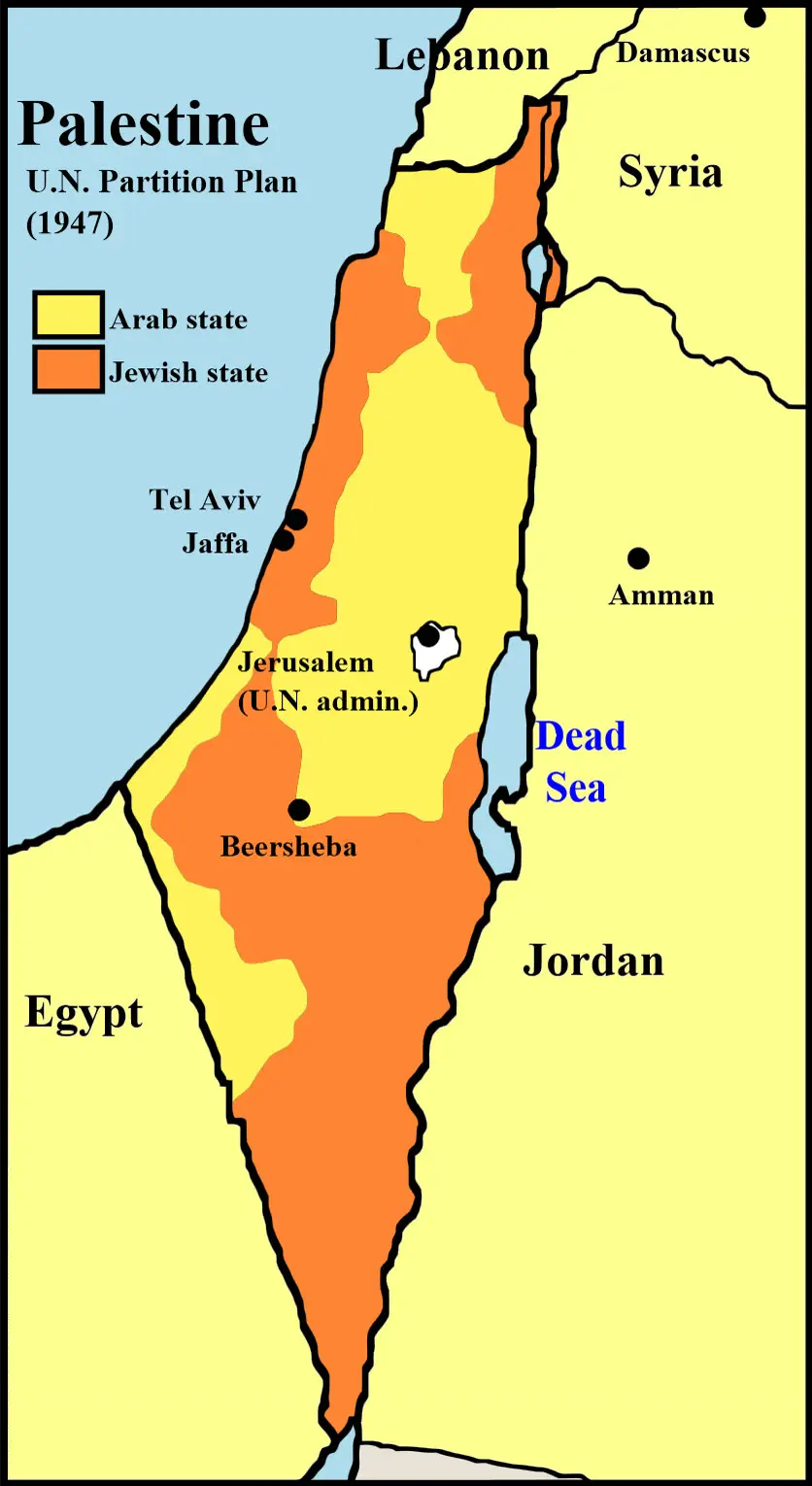
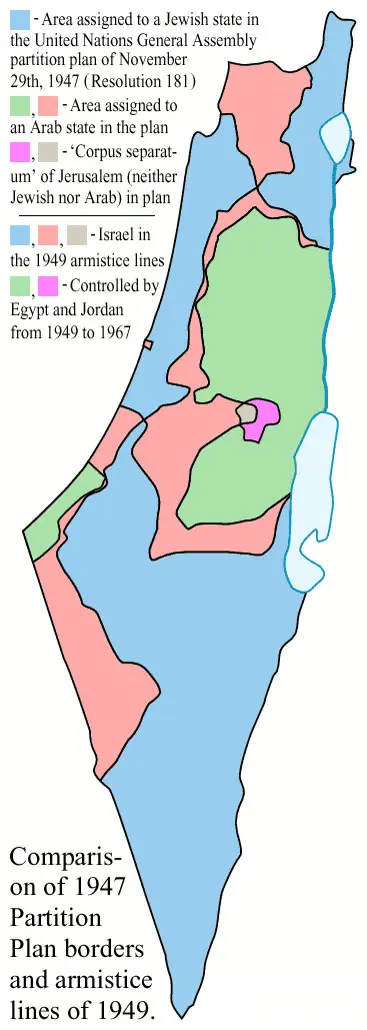
Exhausted after the Second World War, Britain handed the question to the new United Nations. On 29 November 1947 the UN General Assembly voted to partition Palestine. Jews were about a third of the population and owned about 6–7% of the land; the plan gave a Jewish state about 56%. Palestinian and Arab leaders rejected it.
Drag through the maps See the land change.
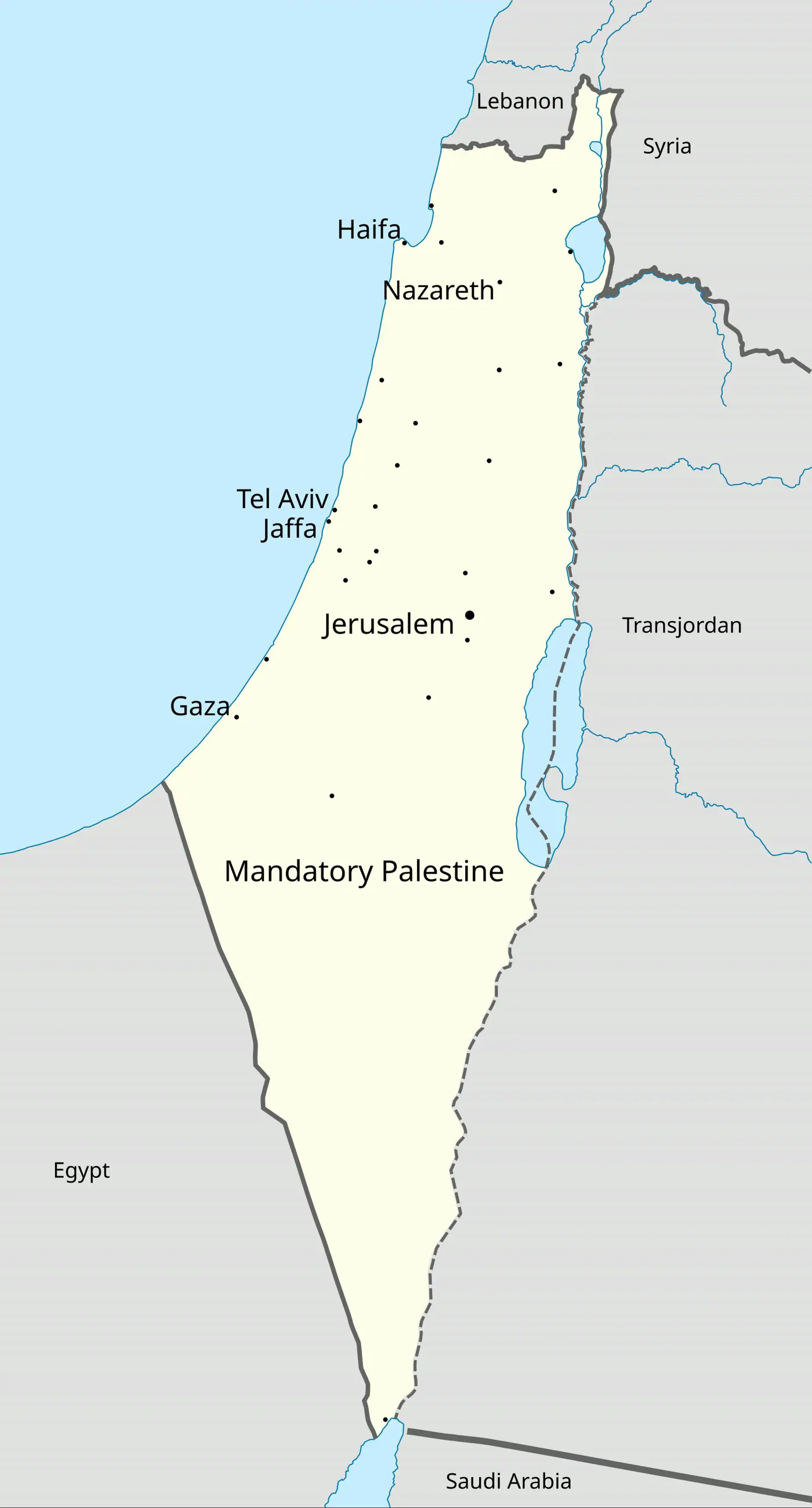
Mandatory Palestine, 1946: one territory under British rule, home to about 1.8 million people, two-thirds of them Arab.
Mandatory Palestine, 1946: one territory under British rule, home to about 1.8 million people, two-thirds of them Arab.
The UN Partition Plan, November 1947: about 56% of the land for a Jewish state (orange), about 43% for an Arab state (yellow), and Jerusalem under international rule.
After the 1949 armistice, Israel held about 78% of Mandatory Palestine. Only the West Bank (under Jordan) and Gaza (under Egypt) remained, shown in green.
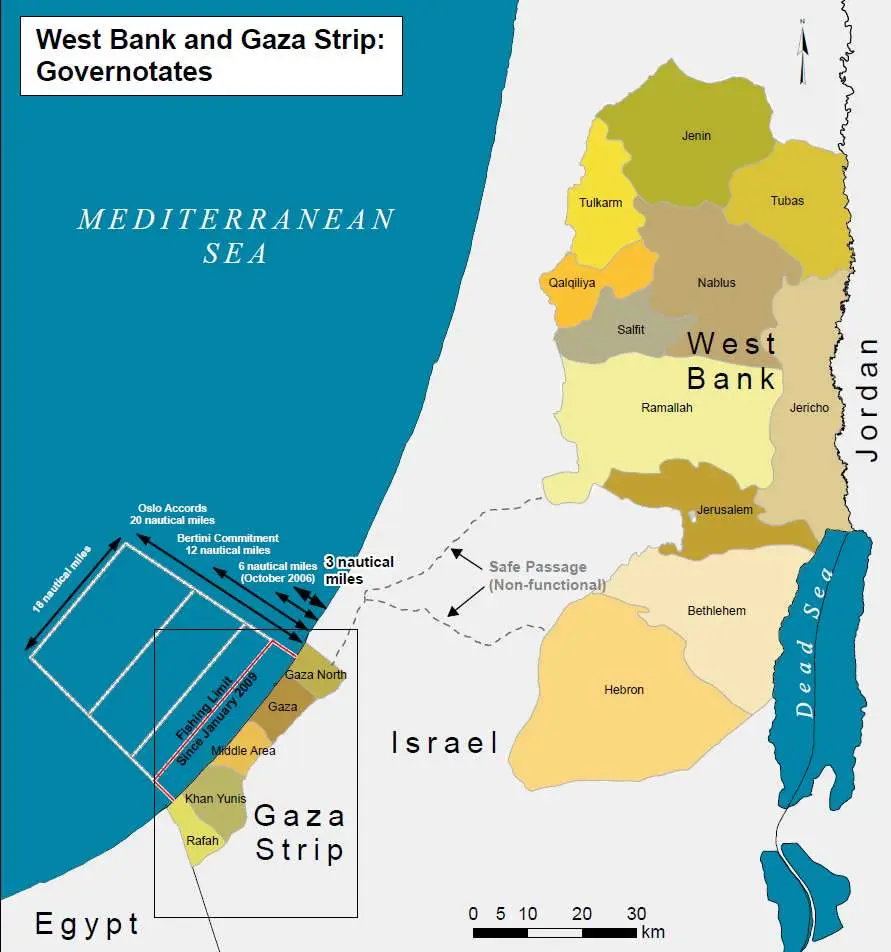
The West Bank and Gaza today, occupied by Israel since 1967 (map: UN OCHA). Palestinian life is split between these two separated territories.
This part describes killing and expulsion.
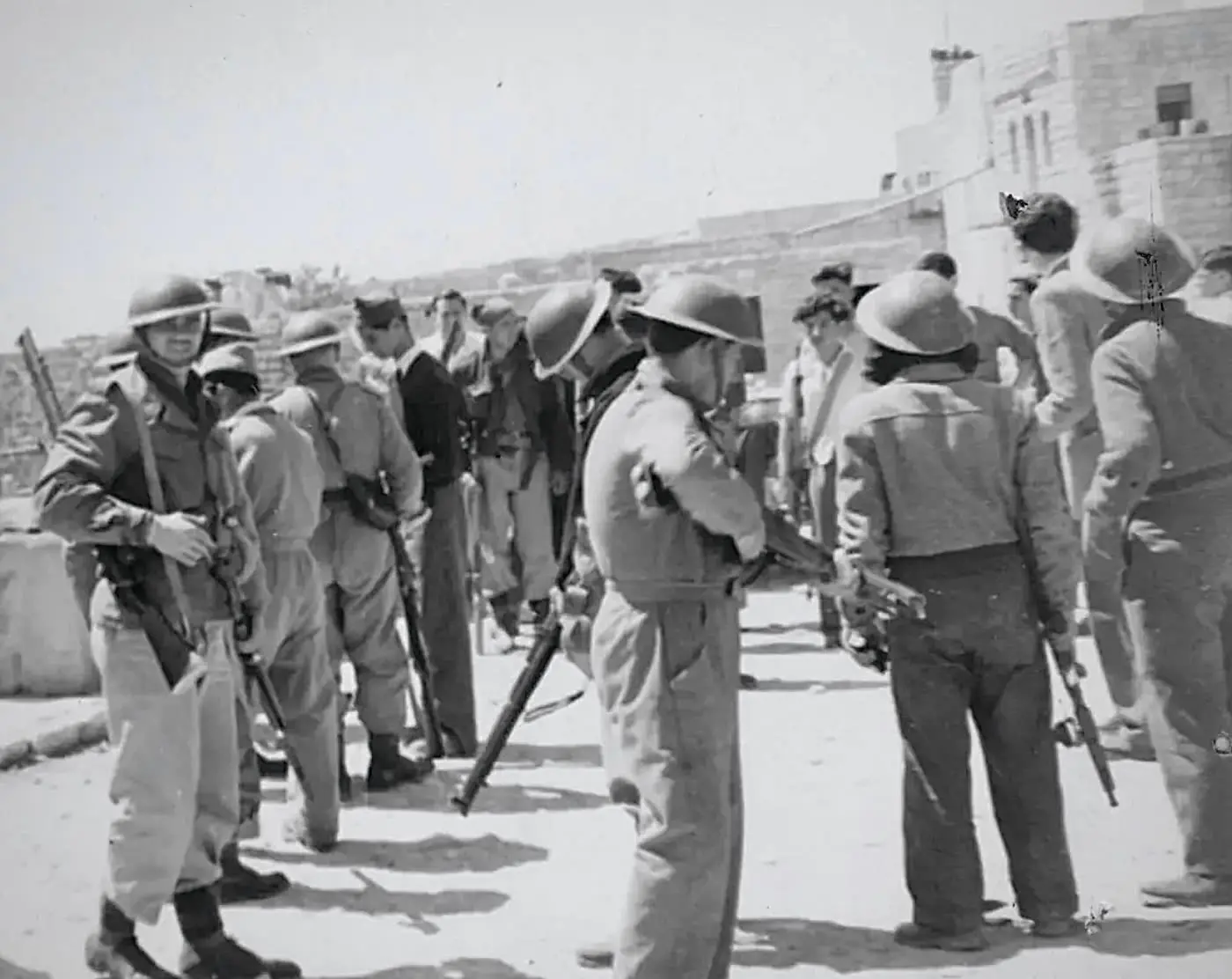
9 April 1948, Deir Yassin. Fighters of the Irgun and Lehi attacked this village near Jerusalem. More than 100 villagers, including women and children, were killed (early reports said 254). News of the massacre spread fear through Palestinian towns and villages.
14 May 1948. The British left and Israel was declared. Arab armies entered the next day.
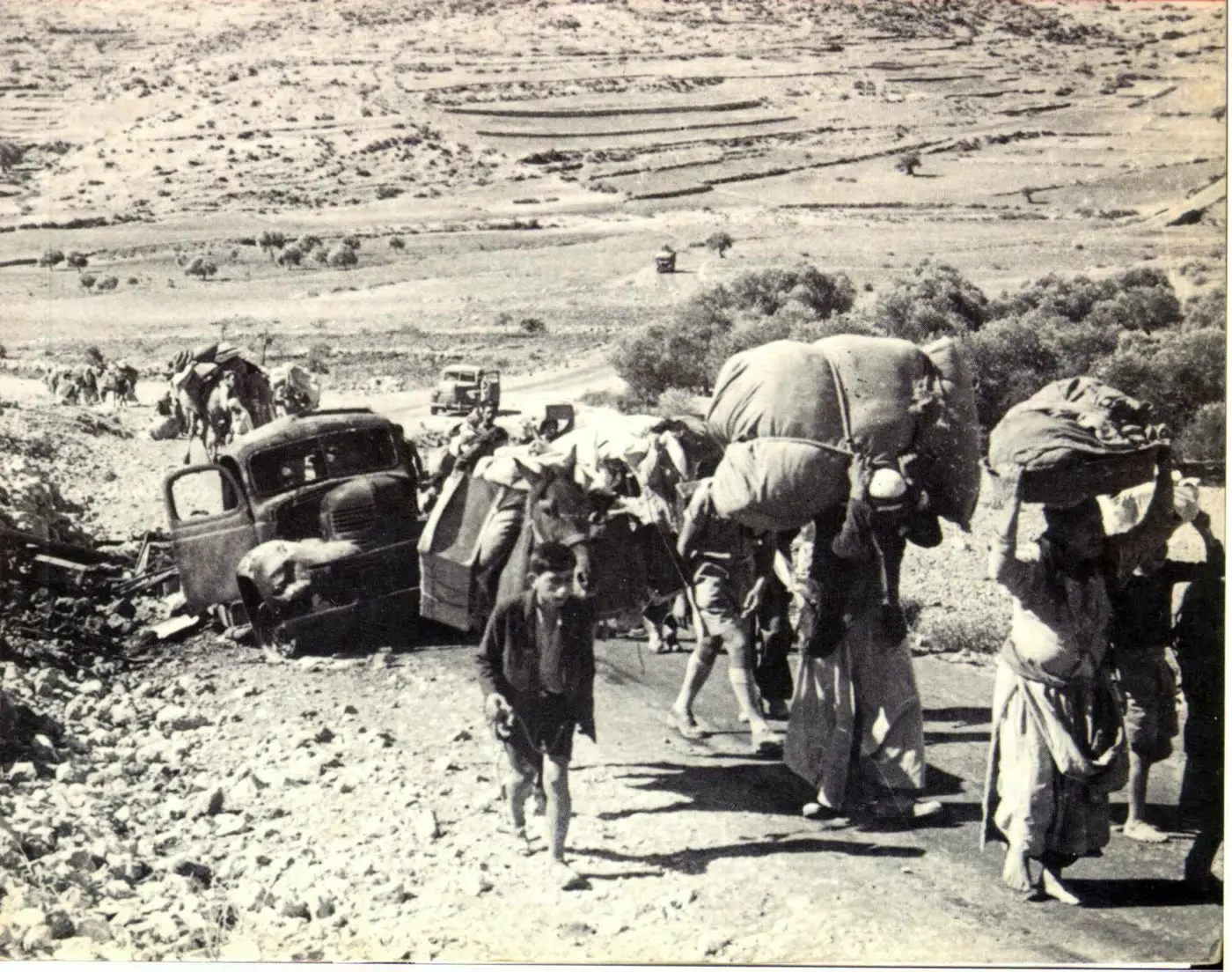
The Nakba (Arabic for “catastrophe”). By the 1949 armistice, about 750,000 Palestinians had fled or been driven out, and more than 400 villages were emptied, many of them demolished. Israel did not let the refugees return, though the UN called for it in December 1948. Their descendants number in the millions today.
Armed militias in Deir Yassin, April 1948Palestinian refugees, 1948
Chapter 5 After 1948
Who Writes History?
For decades, the account most of the world heard came from the victors. Then Israel's own archives began to open.
Old story, new evidence Tap each card.
وَشَهِدَ شَاهِدٌ مِّنْ أَهْلِهَآ
“And a witness from her family testified.” Surah Yusuf 12:26 · Sahih International
When historians from inside Israel confirmed from their own archives what Palestinians had always said, many recalled these words of the Qur'an.
Chapter 6 Your turn
Test Yourself
Keep reading
The Hundred Years' War on Palestine, Rashid Khalidi (2020)
The Question of Palestine, Edward Said (1979)
All That Remains, ed. Walid Khalidi (1992): the villages emptied in 1948
The Ethnic Cleansing of Palestine, Ilan Pappé (2006)
The Birth of the Palestinian Refugee Problem, Benny Morris (1988)
Watch
5 Broken Cameras (2011), Emad Burnat and Guy Davidi
Occupation 101 (2006), Sufyan and Abdallah Omeish
Knowing this history is about justice. Standing with Palestinians never means hatred of Jews: Islam commands justice towards everyone, even those we oppose.